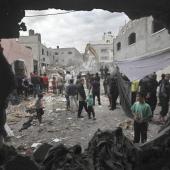
Libya suffered its deadliest fighting in years. Here's what to know about the crisis
Libya's fault lines surfaced as local groups took different positions in the 2011 NATO-backed uprising that toppled Moammar Gadhafi.
An attempted democratic transition slid out of control as armed groups built local power bases and coalesced around rival political factions, seizing control of economic assets.
After a battle for Tripoli in 2014, one faction including most parliament members moved east and recognized Khalifa Haftar as military chief, eventually setting up a parallel government.
A United Nations-backed agreement led to a new, internationally recognized government in Tripoli, but eastern factions spurned the deal and Haftar's Libyan National Army (LNA) attacked the capital in 2019.