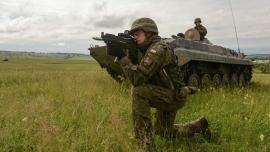
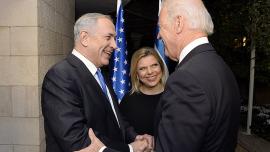
Joe Biden wants you to believe that spending money on weapons is good for the economy. That tired old myth — regularly repeated by the political leaders of both parties — could help create an even more militarized economy that could threaten our peace and prosperity for decades to come. Any short-term gains from pumping in more arms spending will be more than offset by the long-term damage caused by crowding out new industries and innovations, while vacuuming up funds needed to address other urgent national priorities.
French President Emmanuel Macron's words at the start of the week which opened the door to European 'boots on the ground in Ukraine' elicited shock, dismay and caution even from within the Western allies. NATO itself scrambled to assure the world that it has no plans to deploy troops inside Ukraine, with Secretary General Jens Stoltenberg rejecting the idea in remarks, given it would certainly mean automatic WW3.
In the wake of French President Emmanuel Macron’s comments about Western countries not ruling out sending troops to Ukraine, a European official speaking to Financial Times pointed out that Western special operations forces are already in the country.
At least 104 Palestinians were killed and hundreds more wounded when Israeli forces fired on people at an aid convoy in Gaza City’s al-Rasheed Street on Thursday, the Palestinian health ministry said, calling the incident a "massacre".
Ultra-processed food (UPF) is directly linked to 32 harmful effects to health, including a higher risk of heart disease, cancer, type 2 diabetes, adverse mental health and early death, according to the world’s largest review of its kind.
Democracy faced sharp, widespread setbacks worldwide in 2023 with violence and manipulation marring a series of elections, Freedom House said Thursday.
Google CEO Sundar Pichai addressed the company’s Gemini controversy Tuesday evening, calling the AI app’s problematic responses around race unacceptable and vowing to make structural changes to fix the problem.
French President Macron hosted over 20 fellow European leaders in Paris on Monday to discuss their next moves in Ukraine, including the possibility of a conventional NATO intervention, which he said they hadn’t ruled out for reasons of “strategic ambiguity” despite not reaching a consensus on this. His Polish counterpart Duda also confirmed that this subject was the most heated part of their discussions. The very fact that this scenario is being officially considered shows how desperate NATO has become.
Treasury Secretary Janet Yellen on Tuesday called for the US and its allies to hand $300 billion in frozen Russian central bank funds to Ukraine, a step that would significantly escalate the Western economic war against Russia.