The State Department announced it authorized selling $15 billion in advanced air defense systems to Poland. The deal comes as Washington wants to increase NATO’s military presence in Eastern Europe.
In the absence of official scrutiny of Washington’s spending spree on Ukraine, The Grayzone conducted an independent audit of US funding for the country. We discovered a series of wasteful, highly unusual expenditures the Biden administration has yet to explain.
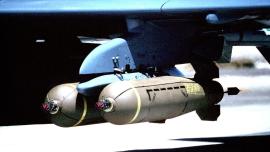
A Pentagon official has told Congress that controversial cluster munitions Ukraine has been seeking from the US would be “useful” to Ukrainian forces on the battlefield.
A report from the Department of Defense Inspector General found Pentagon employees in Poland failed to follow procedures to account for military equipment being transferred to Ukraine. In the shipments of weapons monitored by the office, Pentagon employees failed to properly track the weapons in three of five shipments.
The Biden administration is expected to provide Ukraine with controversial depleted uranium ammunition for use with US-made Abrams tanks, The Wall Street Journal reported on Tuesday.
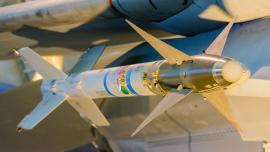
Raytheon Missiles & Defense has received a $264-million contract to produce 571 AIM-9X Sidewinder tactical missiles for the US and international allies.
The debt ceiling agreement reached between the White House and House Republicans places no constraints on spending on the war in Ukraine, a White House official told Bloomberg.
Taiwanese media has reported that Taiwan received delivery of Raytheon-made Stinger anti-aircraft missiles from the US as part of a $500 million package of free military aid that Washington has been preparing for Taipei.
The debt ceiling agreement reached between the White House and House Republicans that was announced Sunday caps military spending at $886 billion for 2024, matching President Biden’s requested budget.
SAS and other British special forces have been involved in covert operations in 19 countries in the past dozen years, including in Nigeria, the Philippines and Russia, as well as in Syria, Ukraine and most recently Sudan, a study reveals.
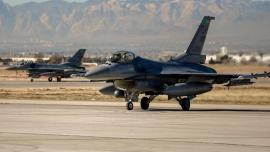
Hungarian Prime Minister Viktor Orban has once again spoken the quiet part out loud, as he continues to be a thorn in the side of NATO and the EU regarding continually escalating arms deliveries to Ukraine, with F-16 fighter jets poised to be delivered to Kiev in the near future.
Secretary of State Antony Blinken and his British counterpart, James Cleverly, vowed on Tuesday that the US and Britain will continue supporting Ukraine in its war against Russia regardless of the result of Kyiv’s expected counteroffensive.
Global weapon expenditures hit a record $2.24 trillion in 2022, an increase of nearly 4%, according to the Stockholm International Peace Research Institute (SIPRI). The global watchdog found the trend was led by European countries returning to Cold-War spending levels, though the United States remained the world’s largest spender on war by far.
(Stockholm, 24 April 2023) Total global military expenditure increased by 3.7 per cent in real terms in 2022, to reach a new high of $2240 billion. Military expenditure in Europe saw its steepest year-on-year increase in at least 30 years. The three largest spenders in 2022—the United States, China and Russia—accounted for 56 per cent of the world total, according to new data on global military spending published today by the Stockholm International Peace Research Institute (SIPRI).
Russian ships have been transporting large quantities of Iranian-made artillery shells and other ammunition across the Caspian Sea to resupply Russian troops fighting in Ukraine, causing an increasing problem for the United States and its allies, who are trying to disrupt cooperation between Moscow and Tehran.
Documents reported by US media say Washington thinks Jerusalem can be convinced to let third parties supply Kyiv with weapons including surface-to-air and anti-tank missiles