
Glyphosate impairs learning in bumblebees
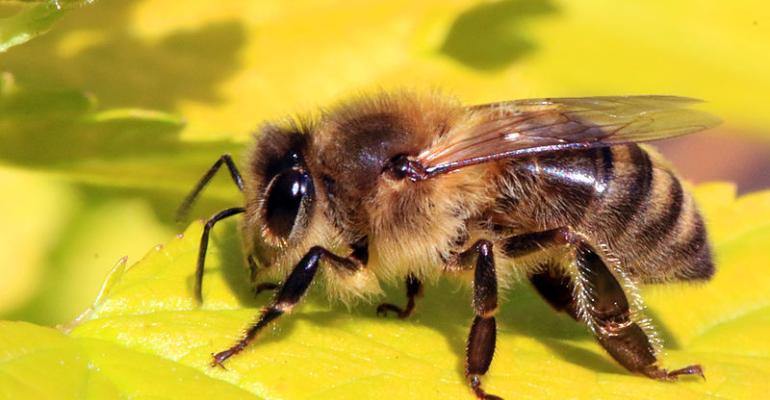


With global insect decline going on at alarming rates, we have to examine the contribution of agrochemicals more closely, going beyond mere assessment of mortality rates," says Morgane Nouvian, biologist and fellow at the Zukunftskolleg (Institute for Advanced Study for early career researchers) at the University of Konstanz. With Anja Weidenmüller and James J. Foster she investigated the impact of long-term exposure to glyphosate on locomotion, phototaxis -- that is the movement in response to light -- and learning abilities in bumblebees. For the researchers, non-lethal effects on fitness are equally important to insect conservation as lethal ones, as they can reduce an individual's chances at reproduction and survival.
A year ago, Weidenmüller had discovered that the collective thermal behaviour of bumblebee colonies that have been chronically exposed to glyphosate is affected when resources become scarce. Studying their ability to regulate the temperature of their brood, she found that these bumblebees cannot keep their brood warm for as long. And she warned that if they cannot maintain the necessary brood temperature, their brood will develop more slowly, or not at all.
Absence of aversive learning
In their current study, the biologists tested over 400 bumblebee workers. The Konstanz scientists demonstrate that bumblebees chronically exposed to glyphosate cannot associate a possible threat (aversive stimulus) with a visual cue during a differential learning task. "As far as we can see, they don't learn at all anymore," Nouvian sums up. In contrast, a control group of bumblebees that had not been exposed to glyphosate showed good aversive learning abilities. "The ability to associate a noxious stimulus with particular cues is a fundamental pre-requisite for survival," says Nouvian and explains: "Through this adaptive behaviour, animals have a better chance of avoiding encounters with poisons, predators and parasites. This is why the learning impairment that we have demonstrated, caused by exposure to glyphosate, could substantially increase the mortality rate of foragers. Such depletion of the workforce would have an obvious impact on colony success, although this remains to be confirmed experimentally."


